
Global Nomination Updates
29 new inscriptions on UNESCO´s Memory of the World Regional Register for Latin America and the Caribbean
- 장준혁
- 2025.12.12
On 10-13 November 2025, the XXV Meeting of the Regional Committee for Latin America and the Caribbean of UNESCO´s Memory of the World Programme (MoWLAC) took place in the cities of Lima and Cusco, Peru
MOWLAC / UNESCO
14 November 2025
Last update:1 December 2025
Summary
The members of the Regional Committee analyzed 72 eligible applications from 15 countries: Argentina (3), Bolivia (8), Brazil (18), Colombia (11), Costa Rica (2), Cuba (1), Chile (1), Dominica (3), Ecuador (3), Guatemala (1), Mexico (7), Peru (8), Saint Lucia (1), Trinidad and Tobago (1), Uruguay (2) and Venezuela (2), approving a total of 29 new inscriptions that will be added to the MoWLAC Registry in 2025.
The Memory of the World programme was set up by UNESCO in 1992 in order to promote the preservation and access to documentary heritage worldwide. Various factors, such as lack of resources, looting, natural disasters, wars and illegal trade, make documentary heritage susceptible to destruction or loss, threatening its preservation for the benefit of humanity.
The Programme is implemented through a system of committees and support mechanisms operating at national, regional and international levels.
The Regional Committee for Latin America and the Caribbean of the Memory of the World Programme (MoWLAC) was established in 2000, with the objective of promoting the documentary heritage that has had an important historical significance in the region. In 2002, MoWLAC approved the first nominations to the Regional Register and since then a total of 263 documentary heritage inscriptions by archives, libraries or museums have been recognized as memory of the world in the region.
New inscriptions in the Memory of the World Regional Register (Latin America and the Caribbean)
-
Argentina
Instituto Nacional de Musicología Carlos Vega – Ethnographic Musical Documents from South America (1931-2008).
The ethnographic musical documentation in physical and analog format held in the Scientific-Technical Section of the Instituto Nacional de Musicología Carlos Vega comprises all the materials produced in the context of 199 ethnomusicological research trips carried out between 1931 and 2008 in South America.
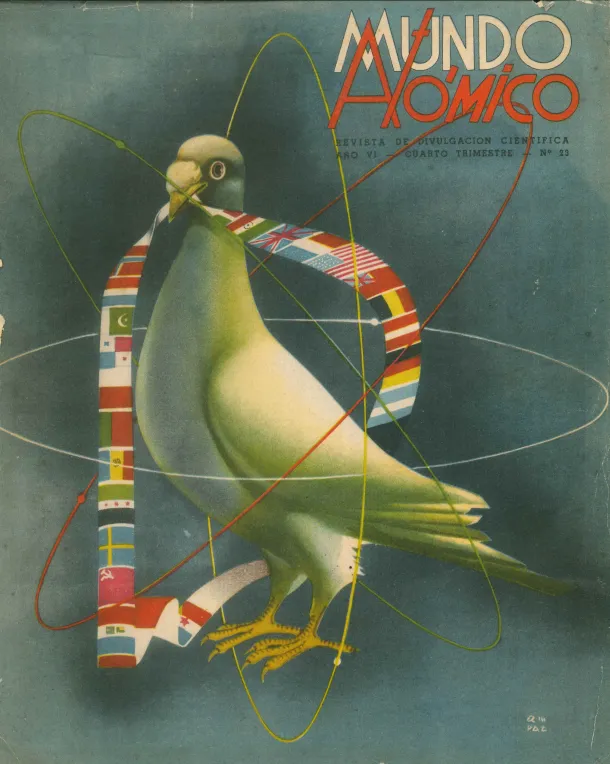
This documentary collection is one of a kind, as it contains records of musical and sound practices from more than 32 indigenous peoples and rural populations across various regions of Argentina, Bolivia, Chile, Ecuador, Paraguay, Peru, Uruguay and Venezuela.Universidad Nacional de José Clemente Paz (UNPAZ) – Mundo Atómico Magazine.
Mundo Atómico (MA) was an Argentine magazine published between 1950 and 1955, dedicated to disseminating science and technology as an integral part of culture, aimed at the general public rather than specialists alone. It stood out for its innovative visual design and for integrating technical, historical, cultural, and natural heritage perspectives, linking scientific development with productive growth.
Bolivia
Casa de la Libertad – Arthur Thouar's Expedition to High Paraguay (currently Bolivian Chaco), 1886-1887, 43 pages (Sketch album of original graphite drawings from the Thoaur expedition, made by Teófilo Novis).
The nominated documental heritage is a set of sketches (forests, rivers, people, animals, etc.), each one with its corresponding title, constituting a primary source on the habitat and daily life of the Bolivian Chaco, of exceptional value for the regional history and international relations with France and Paraguay.Centro de Cultura Plurinacional – Biographical Notes on the Heroes and Martyrs of the War of Independence of Upper Peru (Bolivia).
Published in 1885 by Octavio M. Moscoso, these Biographical Notes on the Heroes and Martyrs of the War of Independence of Upper Peru (Bolivia) represent one of the earliest efforts to recover, organize, and disseminate the biographies of figures who participated in the independence struggle of Upper Peru, now Bolivia.Bolivia – Casa Nacional de Moneda – Public deeds about the African slavery trade between Buenos Aires and the Villa Imperial of Potosí (1635–1636).
The four volumes of Public Deeds dated between 1635 and 1636, gather 1,724 documents of different typologies, among which are recorded operations related to human trafficking of 441 enslaved people (men, women and girls) brought from Angola, Biafra, Cape Verde, Congo, Ghana, Guinea, Luanda and other regions of Africa to Potosí.Museo Nacional de Arte – Epistolary and Artistic Archive of David Crespo Gastelú and Rosenda Caballero (Gloria Serrano) 1923–2001.
This application presents the archive of a couple of artists: David Crespo Gastelú, a painter, and Rosenda Caballero, a writer. Both were strongly committed to leftist ideals and the Indigenous cause, and they cultivated relationships with intellectuals and artists from countries such as Argentina, Chile, Mexico and Peru, as well as Bolivia, in support of the IndoAmerican movement.Museo Nacional de Etnografía y Folklore (MUSEF) – Photographs of the Ava-Guaraní: migration and ethnolinguistic expansion (1976-2007).
David Acebey Delgadillo's photographic archive comprises 1,646 unpublished images documenting the life of the Ava-Guaraní regarded as the last group descended from the historic 16th-century migrations from Argentina, Brazil and Paraguay, and one of the most representative of the Guaraní people in Bolivia. Most of the photographs were taken In Huacareta (Chuquisaca), in the Chaco Chuquisaqueño, in the Hernando Siles Province.
Brazil
Archivo Público Estado de Bahía – Documentary set of Enslaved, Freed, Free, and African Individuals (1821–1889).
The Public Archives of the State of Bahia presents the Documentary set of Enslaved, Freed, Free, and African Individuals (1821–1889), a collection that spans 68 years, covering the First Reign (1822–1831), the Regency Period (1831–1840), and the Second Reign (1840–1889).Estado de Mato Grosso – Repertoire War on Paraguay / Repertório Guerra ao Paraguai.
The war between the Triple Alliance (Argentina, Brazil and Uruguay) and Paraguay (1864-1870) was the largest international armed conflict in Latin America, and it is designated as the “Guerra ao Paraguai” ("War in Paraguay") in this documentary collection to indicate a certain balance of responsibilities among the involved countries.Fundación Casa de Rui Barbosa – Barbosa de Oliveira Family Collection.
The Barbosa de Oliveira Family Collection is a valuable documentary heritage for understanding Brazilian and regional history, covering the period from 1778 to 1965.Fundação Getúlio Vargas (FGV CPDOC) – Memoria histórica e cultural do Povo Indígena Apinajé: coleção fotográfica 1960-2009.
This photographic collection (1960-2009) consists of records from four personal archives belonging to ethnologists: Roberto DaMatta, Luis Olinto, Odair Giraldin, and Raquel Pereira Rocha. These images, some 3,000 photographs, marked the beginning of visual documentation, recorded during academic fieldwork carried out in different historical and ethnographic contexts.Fundação Nacional de Artes (Funarte) – Fernando Peixoto Collection.
This collection comprises documents produced and accumulated throughout the trajectory of Fernando Peixoto (1937-2012), one of the most prominent figures in Brazilian contemporary theatre.Instituto Burle Marx [Burle Marx Institute] – Burle Marx Landscape Studio Fund (1930-1994).
Roberto Burle Marx was one of the exponents of the modernist movement in Brazil. The landscape projects developed by him over 7 decades brought his ideals and concepts closer to everyone, creating democratic spaces of well-being for the city.Prefeitura Municipal de Salvador (Ayuntamiento de Salvador). Arquivo Histórico Municipal de Salvador – Letters from the Senate to His Majesty / Cartas do Senado a Sua Majestade.
The Letters from the Senate to His Majesty, one of the means by which the relationship between the colony and the Portuguese metropolis was established, are characterized as records of letters received and sent (mostly) by the Senate in the years 1640-1889.
Colombia
Archivo General de la Nación (AGN); Instituto Geográfico Agustín Codazzi (IGAC); Sociedad Geográfica de Colombia (SOGEOCOL); Archivo Central e Histórico de la Universidad Nacional de Colombia (División de Gestión Documental de la Sede Bogotá); Sociedad de Mejoras y Ornato de Bogotá (SMOB) – The maps of Agustín Codazzi and the Chorographic Commissions of Venezuela and New Granada 1830-1890.
The maps produced by the Chorographic Commissions led by Agustín Codazzi in Venezuela (1830–1839) and New Granada (now Colombia, Panama, and part of Ecuador, 1850–1859), as well as the maps that were realized by his successors after his death, represent the first cartographic survey of the territory of these Latin American nations in their republican life.Centro Nacional de Memoria Histórica – Archive and Bibliographic Collection of Human Rights of the Human Rights Archives Directorate of the National Center for Historical Memory. 1946-2024. (Addenda)
These documentary materials include collections on human rights violations related to the internal conflict in Colombia. Constitutes an addendum to MoWLAC registration 248/2024, approved in 2024, which proposes the incorporation of 52 additional documentary fonds, dating from 1953 to 2024.
Costa Rica
Archivo General de la Nación – Documents on the National Campaign 1856-1857 against the filibusters.
This collection of documents (letters, decrees, minutes, maps) on the National Campaign (1856–1857) constitute essential primary sources for understanding the defense of sovereignty against William Walker's filibuster expansionism, consolidating the identity of Costa Rica and the region.
Ecuador
Gobierno Autónomo Descentralizado Municipal de Guayaquil – Manuscript of the Poem La Victoria de Junín. Canto a Bolívar, written by José Joaquín Olmedo (1825).
La Victoria de Junín. Canto a Bolívar is a unique manuscript, written and signed by José Joaquín Olmedo, celebrating the independence of South America and exalting Simón Bolívar’s victory in the Battle of Junín (1824).
Guatemala
Universidad de San Carlos de Guatemala – The Royal Certificate of the Appointment of Mr. Joseph de Baños y Sotomayor as the first Rector of the University and as Professor of Scholastic Theology.
The Royal Certificate of the Appointment of Mr. Joseph de Baños y Sotomayor is a manuscript from 1686 that constitutes the founding document of the highest university authority.
Mexico
Archivo General Agrario – Historical Collection of Maps from the General Agrarian Archive of Mexico. 1917-1992.
This collection, dated between 1916 and 1992, consists of approximately 110,000 cartographic documents reflecting the agrarian distribution that took place in Mexico after the 1910 Revolution. These maps have great historical, aesthetic, and material value. They were hand-drawn by expert engineers and draftsmen, are unique, and have no copies. These documents are valuable testimonies to the first major agrarian distribution in Latin America.Radio Educación – Latin American Sound Memory: Exile and Resistance through Radio Education, 1974-2016.
This is a collection of 420 programmes produced by Radio Educación, a public cultural institution of Mexico. It documents the voices of Latin American exiles in Mexico during the military dictatorships and sociopolitical crises of the 1970s and 1980s, highlighting their impact on the cultural and political fabric of the region.Secretaría de Relaciones Exteriores de los Estados Unidos Mexicanos –Collection of Documents of the Congress of Panama in 1826 and Tacubaya in 1828, contained in the Legajos Encuadernados Fonds.
The Amphictyonic Congress of Panama in 1826 was an assembly convened to unite the newly created Spanish-American republics after they had undergone a process of Independence from Spain. The documentation is kept in the Archivo Histórico Genaro Estrada del Acervo Histórico Diplomático of the Secretaría de Relaciones Exteriores (SRE) of México.Unión de Colonos de San Miguel Teotongo A.C. – Urban equipment map of San Miguel Teotongo.
This is a planning instrument recorded in a legalized plan in the federal newspaper of 1992, in which the residents of a part of Mexico City safeguard and plan 116 hectares of territorial reserve within their community.
Peru
Everardo Zapata Santillana Personal Library – Coquito –
This bibliographic material is the first edition of Coquito (1955), a landmark work by Peruvian educator Everardo Zapata Santillana (Cocachacra, Arequipa, 1926). A teacher by calling, Zapata is a key figure in the history of primary education in Peru.Supreme Court of Justice of the Republic of Peru – The file concerning Trinidad María Enríquez's petition for a general law allowing women to obtain academic degrees and practice law (1878–1891).
This file is a powerful testimony that makes it possible to reconstruct the life and achievements of one of the first women to challenge gender barriers in academic and professional fields in 19th-century in Peru.Jurado Nacional de Elecciones – Book of Registered Candidates, 1956.
The Book of Registered Candidates marks the official entry of women into Peru’s electoral political scene, representing a significant milestone in the international movement toward gender equality.
Saint Lucia
Hunter J. François Library Sir Arthur Lewis Community College – Derek Walcott Personal Home Library (1930-2017).
Sir Derek Walcott, Nobel Laureate for Literature, was born in Saint Lucia and now rests on the grounds of the Sir Arthur Lewis Community College, where his personal home library is permanently housed.
The Derek Walcott Personal Home Library (1930–2017) is an entire, intact library of 3,338 books, an exclusive collection of the actual books and reference materials Derek Walcott collected, read, taught from, annotated and valued throughout nearly seven decades, up until his death.
Trinidad and Tobago
The Alma Jourdan Library. The University of the West Indies – Earl Lovelace Manuscripts, 1963-1999.
Earl Lovelace, born in Trinidad and Tobago on 13 July 1935, spent most of his life in the twin-island state pursuing a writing career that resulted in an extensive and distinguished body of work, including novels, short stories, poetry, plays and essays.
Venezuela
Biblioteca Nacional de Venezuela – The Voice of the Liberator Simon Bolivar Resounds in the Correo del Orinoco, 1818-1822.
El Correo del Orinocо (1818-1822) was a vitally important publication for American and Venezuelan independence. It was inspired by Simón Bolívar and published in Angostura (currently Ciudad Bolívar), the political epicenter from which the Liberation Army launched its military campaigns toward New Granada and South Americа.